Thursday, March 10, 2011

Leading a Lively Post-Show Discussion


By Teresa Rende, Education and Community Engagement Assistant

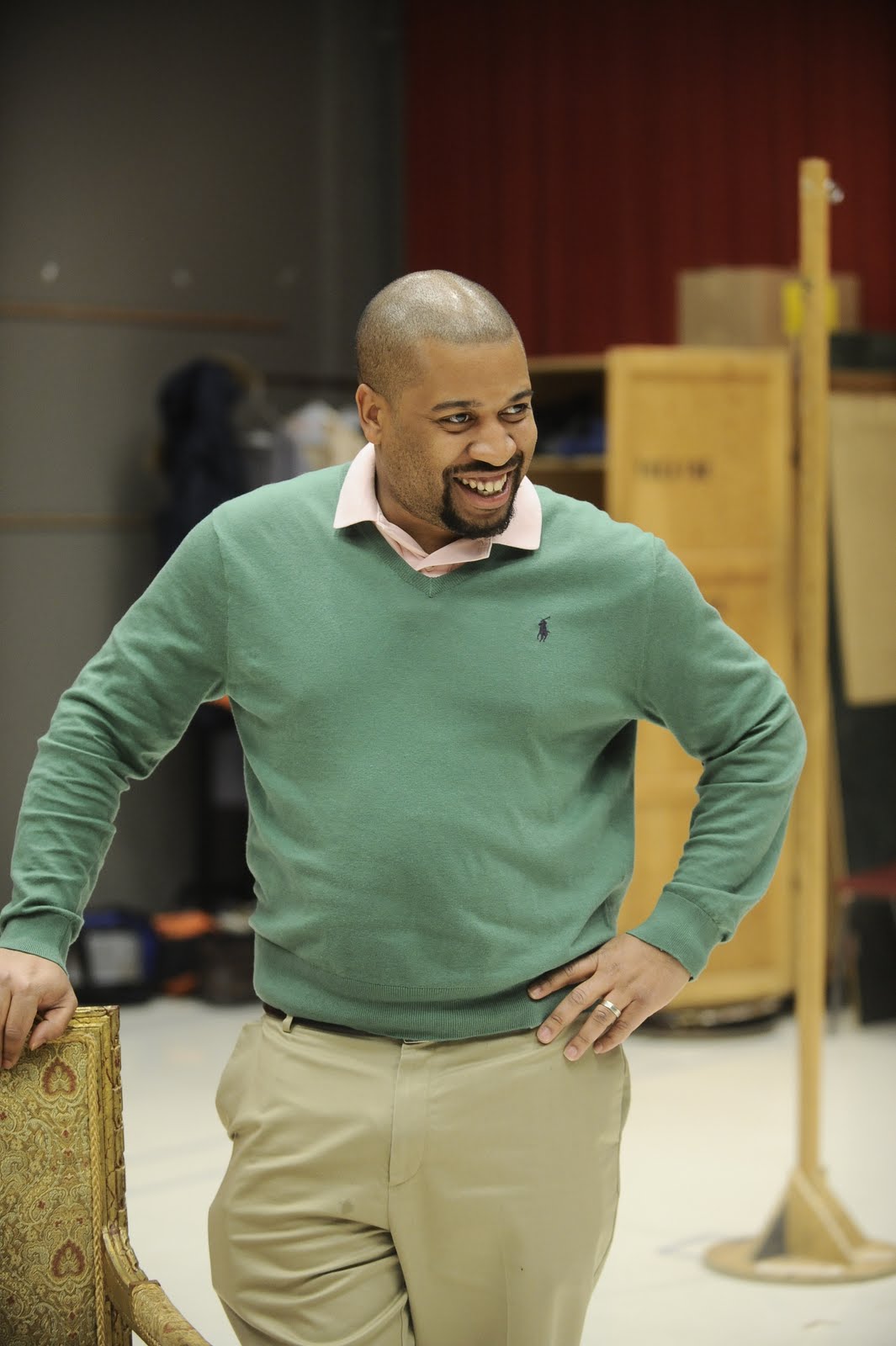
I’ve led and attended a number of post-show discussions in my life, but none have been as intriguing as those for Mary. While I always appreciate the questions and comments our audience has for our artists and staff at post-show discussions, Mary has created a dialogue among audience members like none I've ever seen before. Folks raised their hand to share a thought or question a choice made in the play, and suddenly their fellow audience members would raise a hand—not to ask the next question, but to respond to the one previously offered, which was fantastic for me, because as a moderator my job is to facilitate an interesting and important conversation among engaged audience members.

Mary, however, can be jarring in a way that discussion does not necessarily resolve. Last week, I moderated a discussion in which three audience members had an issue with the ending that led to a debate that was simultaneously intellectual, social and emotional. The argument was that the character Mary may be misinterpreted by some viewers as speaking for all black, Christian women, simply because she is a black woman on a stage. As a room, we agreed that everyone is entitled to their own opinion even if we don’t like it (including the character Mary) and that Mary didn’t serve as a symbol for all black, Christian women. But in a climate where minorities in the media are constantly viewed as representing their people, the question arose, “Is showcasing such a character a risk?” The people who stayed to discuss knew Mary was simply one character; but might someone walk out of the theater with an altered view of the black church, black women, Christians or theology majors? The discussion grew heated as people questioned what it meant simply to have Mary on the stage.

Playwright Thomas Bradshaw mentioned during another post-show discussion earlier in the run that we don’t live life in ideals and singularities. An audience member at that post-show felt that putting all of the various “big issues” Mary touches upon in one play trivialized them. Thomas explained that in the real world, we don’t have the option of tackling one issue at a time. One play about gay rights and one play about racism in the post-civil-rights-era might be easier to digest, but the idea that, “today I am a female, tomorrow I am a lesbian, and Wednesday I am black,” isn’t an option. We live our labels, whatever they may be, simultaneously. And Mary, as a post-slavery-era slave, also wore her hat as an anti-gay activist and a devout Christian scholar.

I led the final post show for Mary last Friday, and an audience member asked me to list one thing I’d take away from the experience of having Mary on stage and moderating discussions. I told her that Mary has helped me appreciate art for what it is. Art is frequently loaded with an agenda, and while Mary brings up a number of important social topics, it doesn’t force a perspective of “right” or “wrong.” Instead, it questions our biases and forces us to face the fact that good people sometimes have opinions that we simply don’t agree with. “Dissent is not necessarily malicious,” as one very astute audience member put it. To understand Mary, I had to step away from the politics inherent in controversial topics, and instead let the story wash over me for 90 minutes. It has been such a gift to appreciate a work of art in this way, and share these amazing discussions with our audiences.

Wednesday, February 9, 2011

Blazin’ Hot Season

Earlier this week—this frigid, sub-zero week—we announced our “red hot” 2011/2012 Season: a mix of big Broadway hits (Red and Race), old and new classics (Camino Real and Crowns), and brand new work (The Convert). Head over to our website and explore our 2011/12 line up, warm up against it—then sound off in the comments on our selections.

Thursday, February 3, 2011

Censorship, Controversy, and the Role of Art

By Willa Taylor, Director of Education and Community Engagement.

The Goodman recently hosted Belarus Free Theatre, a company of artists who at the moment cannot return to their country because the repressive regime in the former Soviet republic does not like what these artists’ works say about repressive regimes. Government agents have gone to the artists’ homes, interrogated their relatives, jailed some of their colleagues. A few weeks ago, before they started their current tour with an appearance at the Public Theatre’s Under The Radar Festival, the husband-and-wife leaders of Belarus Free Theater were arrested and roughed up during demonstrations against the government; Natalia was threatened with rape by the police.

That we hosted them is wonderful. That this theater would move quickly to give artistic refuge is one of the reasons why I am proud to work at the Goodman.

Freedom of speech is a basic tenet of our society. Freedom of expression is the right of every American and the mandate for every artist. But in this increasingly polarized society, is freedom of expression possible? When Mark Twain’s Huck Finn can be rewritten to make it more palatable to the squeamish, when government pressure forces the National Portrait Gallery, a gallery supported by my tax dollars, to remove an art work to assuage a politician, how do artists, artistic institutions, and cultural collaborators like critics make space for the debates that art should engender?

In her remarks celebrating World Theatre Day 2010, the Pulitzer Prize-winning playwright Lynn Nottage said this of art and artists: "We must be unafraid to look honestly at the human condition and try to come to terms with its contradictions and flaws." That means approaching our work not as journalists, but as fabulators, storytellers, breaking rules to help re-imagine the world. We must be truthful, while spinning yarns. It is the paradox of our creative process that gives us access to places we dare not go in our everyday lives. It emboldens us to ask difficult questions about war, race, religion, poverty, love and hatred.

Art should provoke thought and promote discussion. In light of the Belarus Free Theatre’s plight, we must remember what is truly at stake.

Why Mary?


By Robert Falls, Goodman Theatre Artistic Director

Rehearsals for the Goodman’s upcoming production of
Mary charged forward this week, amid the third-worst blizzard in Chicago history. The first performance of this world premiere by Thomas Bradshaw (right) is this Saturday night; below, Goodman Theatre Artistic Director Robert Falls shares his thoughts on this remarkable new work.

When considering works for inclusion in a season at Goodman Theatre, we look for plays that contain myriad qualities: the uniqueness of the artistic voice (or voices) that power the project, the theatrical viability and vibrancy of that voice, and the urgency with which that voice must be heard—or in other words, why must this play be done by the Goodman now? Inherent in all of these considerations is our desire to stimulate a dialogue—both between our artists and audiences, and among our audiences in general—that addresses significant issues and concerns
in our lives, our society and our world.

Mary is the newest work by Guggenheim Fellow and Prince Prize-winning playwright Thomas Bradshaw, one of the brightest lights of a new generation of young writers who focus on the ideas and beliefs that continue to factionalize us, whether in the context of our families or in our society. Commissioned by the Goodman, Mary confronts the pervasive nature of racism and homophobia in American society with biting satire, while attacking and undermining the social and racial stereotypes that still plague us. Mary is timely and theatrical, and we hope that it will spark a lively discourse on the changing nature of bigotry and oppression in our
contemporary world.

When it was presented in staged reading form as part of our 2009 New Stages Series, Mary elicited a variety of passionate audience responses. I have no doubt that this production, under the direction of Thomas’ longtime collaborator May Adrales, will do the same.

Friday, December 17, 2010

Scene and Heard

Happy Friday! Live theater is best, but theater-themed links are a moderately close second:


-When sets spread into the seats: The New York Times takes a look at environmental theater design.

-In Moscow, a bitter dispute rages over an opera house. (The Independent)

-What happens when 300 Los Angelenos perform spontaneous street theater? In the Heights creator Lin-Manuel Miranda has a pretty fun lunch, that’s what (YouTube).

-Using theater to cultivate peace in the Congo. (The Common Ground Blog)

The Guardian takes note as Belarus Free Theatre teaches a crowd of eager Londoners the true meaning of the phrase “brave performance.”

“Stephen-squared”—Sondheim and Colbert, together at last (Culture Monster).

Friday, December 10, 2010

Scene and Heard

As our favorite curmudgeon-in-residence continues to Tweet his frozen heart out, check out these links from the world wide web:

Goodman Artistic Associate and playwright of The Trinity River Plays—which opens at the Goodman next month—Regina Taylor, writes about her inspiration on Black America Web.

Jeff Daniels on switch hitting God of Carnage.

Was Scrooge really all that bad a boss?

The mayor of Yerevan, Armenia, reminds us why it’s important to secure your seats early.

Wednesday, December 8, 2010

The Making of Chinglish

By Tanya Palmer, Director of New Play Development

The plays that I respond to the most are plays that ask a lot of us. They challenge designers and directors by creating complex, imaginative worlds that demand brilliant creative solutions to realize them onstage. They demand a lot of actors because the characters who inhabit them are never simple or predictable in their behavior or their psychology. And they demand a lot of audiences because they ask them to listen closely with their heads and hearts.

Chinglish—David Henry Hwang’s latest work, which will make its debut at the Goodman this June—is definitely a demanding play, not just on all those folks I mentioned, but on its producers too. But boy does it give a lot back. Set in a smallish city in contemporary western China, the play tells the story of an American businessman who travels there in hopes of taking advantage of China’s “economic miracle,” but soon discovers that he truly doesn’t understand what’s happening around him. Written in both English and Mandarin, the play addresses the issue of translation and how difficult it is for people from two different cultures to communicate. Chinglish is a demanding play to work on because it asks a bunch of people from different cultural backgrounds to get together in a room. It asks Americans who generally, as the play tells us “don’t speak a single f***ing foreign language,” to wrap their head around Mandarin, and it takes us into a country and a culture that many of us think we know something about, but most of us really don’t. But it does it with such incredible humor, skill, and intelligence that it feels almost effortless.

A few weeks ago, a group of the collaborators working on the play—who ranged from the usual collection of actors, directors, and designers, to a Hong Kong-based playwright and translator who is working closely with David Henry Hwang on the Mandarin translations in the play, to a cultural ambassador who had guided Hwang and a group of New York producers through the ins and outs of Chinese bureaucracies—gathered to workshop the play at the Lark Play Development Center in New York City.

Workshopping a play is something we do all the time. It usually involves casting a group of actors—some of whom may go on to perform in the final production, some of whom may not—gathering them around a table, and reading the play. Then we discuss the script as a group. Perhaps the writer will go away and make some changes—and then ultimately a small audience of interested parties is invited to come and hear the play read out loud. This was what happened this time around as well, but with a lot of added hurdles in the way.

First off, the casting. David has written a play that is essentially half in Mandarin (though don’t worry—there are subtitles, so all of us non-Mandarin speakers can follow along). It can be tricky enough to find Asian actors who speak Mandarin, but one of the characters is an Australian-born English teacher named Peter who speaks fluent Mandarin. Certainly there are westerners out there who can speak fluent Mandarin – maybe even a few Australians. But can they act? Miraculously, the crack casting teams from the Goodman and The Public Theater in New York tracked down a wonderful young actor named Benjamin Thys. Originally from Belgium, Benjamin had worked and studied in China, and happened to be in New York pursuing an MFA in acting at New York’s New School. He was offered an opportunity to take part in the workshop, and the play was cast.

Then, the subtitles. Sean, a videographer and fluent Mandarin speaker, has been part of the creative team from early on, and has been invaluable in putting together the subtitles that serve not only a useful function (we get to understand what the actors are saying when they speak Mandarin) but also a critical thematic and comic function—this is, after all. a play about translation, and how slippery language can be. There’s what people mean to say—and then there’s what the translators translate. Rarely are they the same.

And then, there’s coming up with the best way of translating David’s language from English to Mandarin—that’s where translator Candace Chong and China consultants Joanna and Ken Lee came into the mix. They have helped not only in shaping the language of the piece, but also in bringing an authenticity to the world of the play. Joanna and Ken arranged a trip for the playwright, director and producers to western China, where the play is set, and there they met Chinese bureaucrats and were guided through the world that the play conjures. Because the play is all about miscommunication—cultural, linguistic, and everything in between—a thorough understanding of what we’re misunderstanding about the Chinese language and culture is critical for David to craft his play. Candace, Joanna and Ken’s knowledge and understanding have been an integral part of this play coming to life.

They say it takes a village to raise a child—this is no less true of a play, particularly a play as ambitious as Chinglish. After this, rehearsing and staging the play should seem like a piece of cake.